
Photography has been utilized for centuries as a means of capturing a particular moment in time. There have been many mechanisms used to construct a photograph’s meaning, which include the daguerrotype, the Kodak camera, and digital cameras. At the time, these devices seemed revolutionary; however, did they do much to enhance photography? Although these methods have transformed photography as an art form, they have also restricted people. “The photograph not only signals a different relationship to and over nature, it speaks very much to a sense of power in the way we seek to order and construct the world around us” (Clarke 11). This same quote can be discerned throughout social media. Users attempt to control their identities through platforms like Instagram, in order to garner a following. Gaining followers is extremely difficult because there are a few key components that many potential followers look for in one’s account. This constant pressure promotes people to act and post pictures that do not speak to their authentic selves. Instagram asks its users to conform to a specific aesthetic, in order to align with the algorithm put into place. Some of these factors include the square setting, the restrictive tagging options, and the limited amount of editing mechanisms made available for users within the app.
Instagram’s square setting greatly limits the posts that users can create. More often than not, people’s photographs are cut off or distorted by this square template. If you do a quick Google search, you will find millions of people inquiring how to fit an entire picture onto their feed. People have to download second and third party apps just to somewhat fit their full image into Instagram. However, this comes with a consequence. Other apps create white space on the sides of your photograph, in order to properly fit one’s image onto their Instagram feed. As a result, a person’s feed becomes very distorted and unappealing to the eye. In turn, this has a big impact on whether or not someone is going to follow your account. People are drawn to those who have feeds that are not only captivating, but also aesthetically stimulating. Having a picture with a two-sided border breaks up the fluidity of one’s entire account. Therefore, engaging in these practices will thus be very detrimental to a person’s presence on the website. This same idea can be delineated within the pictures I posted onto my Instagram account.
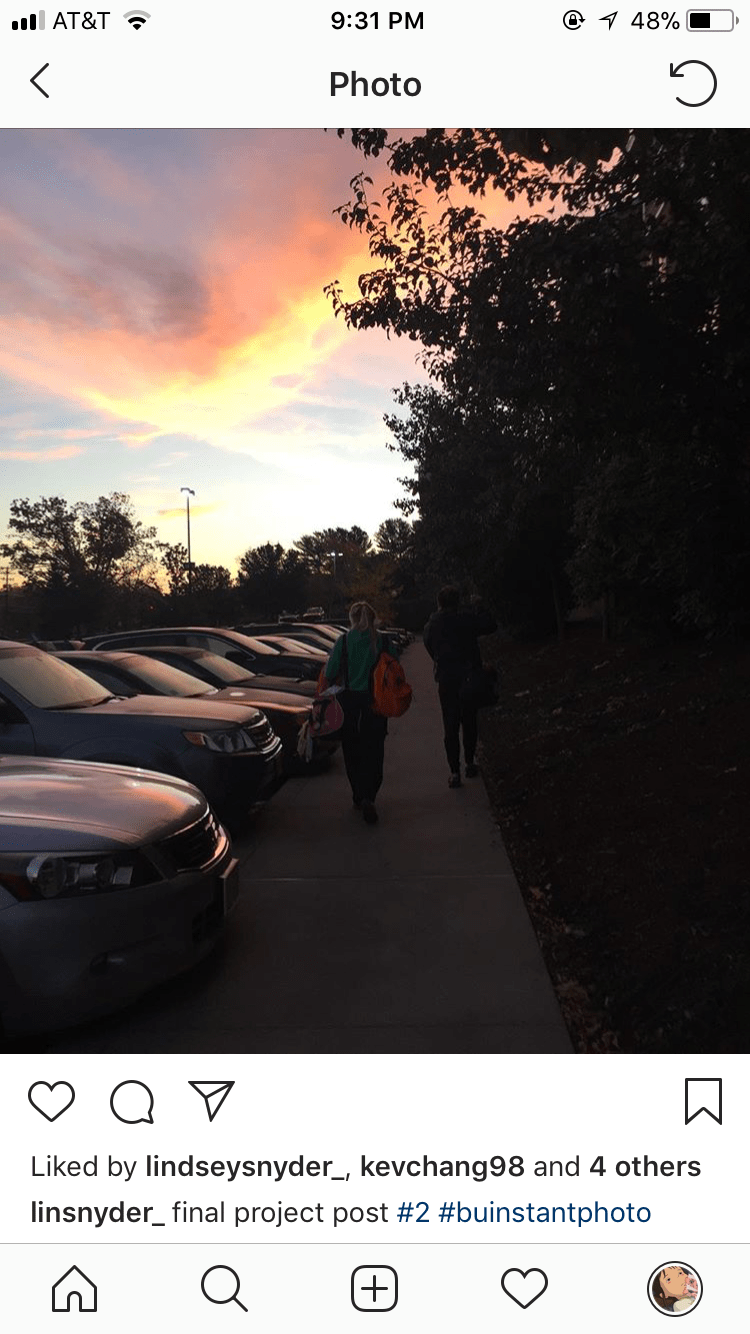
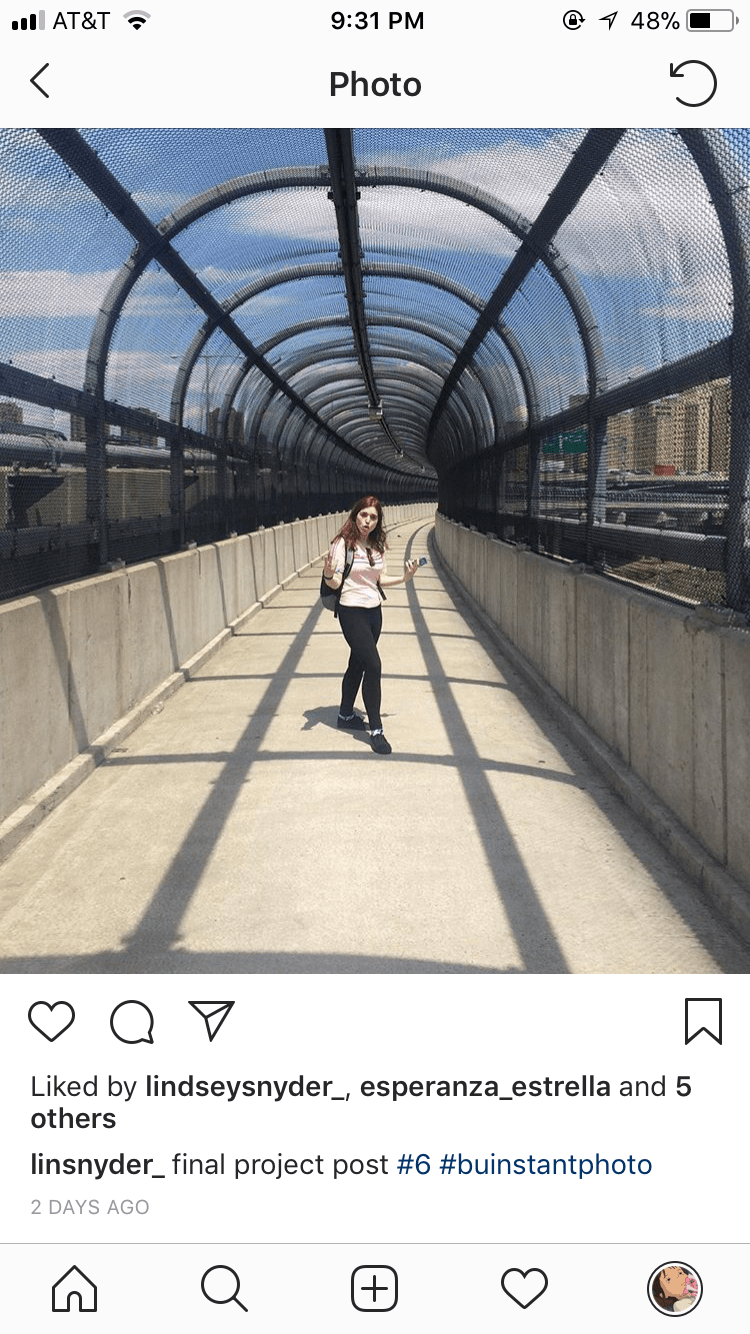
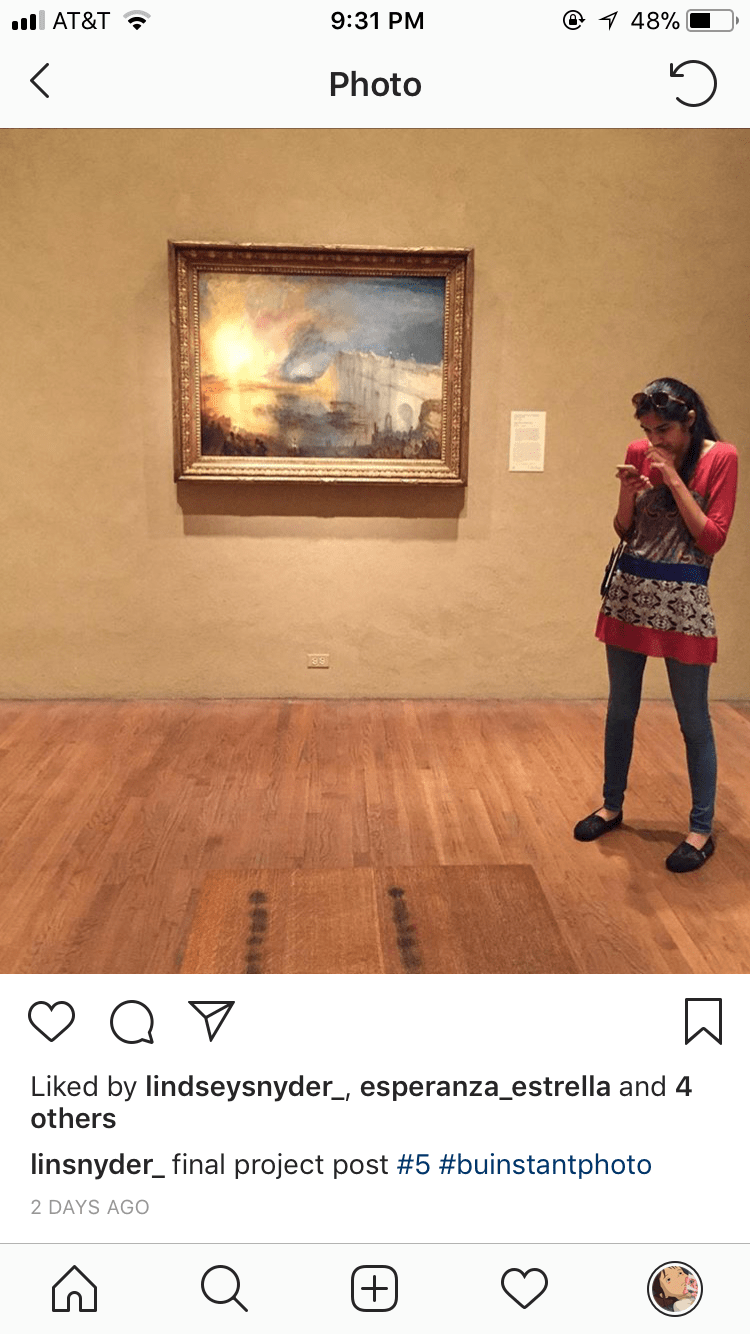
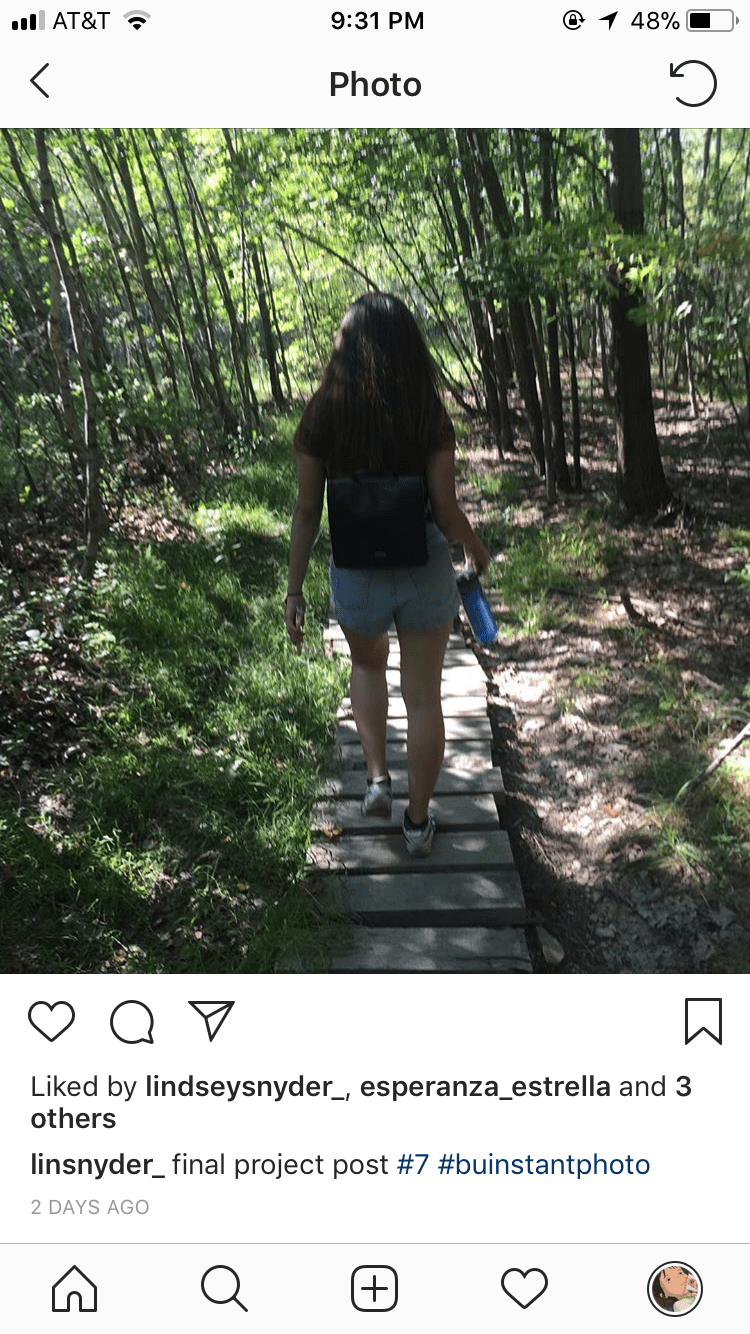
In my Instagram posts captioned, “Final Project Post #1,” “Final Project Post #2,” “Final Project Post #5”, “Final Project Post #6,” and “Final Project Post #7,” a constant theme is made apparent. There is a vertical limitation to the viewing of these posts. When a person comes onto this profile and quickly glances at the feed, the height of the pictures is undetected. Because of this loss of perception, much of the image is lost in translation. The entire context of a photograph is necessary to truly ensure one’s understanding of what is in front of them. For example, in “Final Project Post #6,” the viewer only sees me standing in a winding tunnel that isn’t that tall. However, there is a huge difference once this post is opened because the size of it grows exponentially. Size, although a factor of formalist thought, is still very important and necessary to this story’s background.
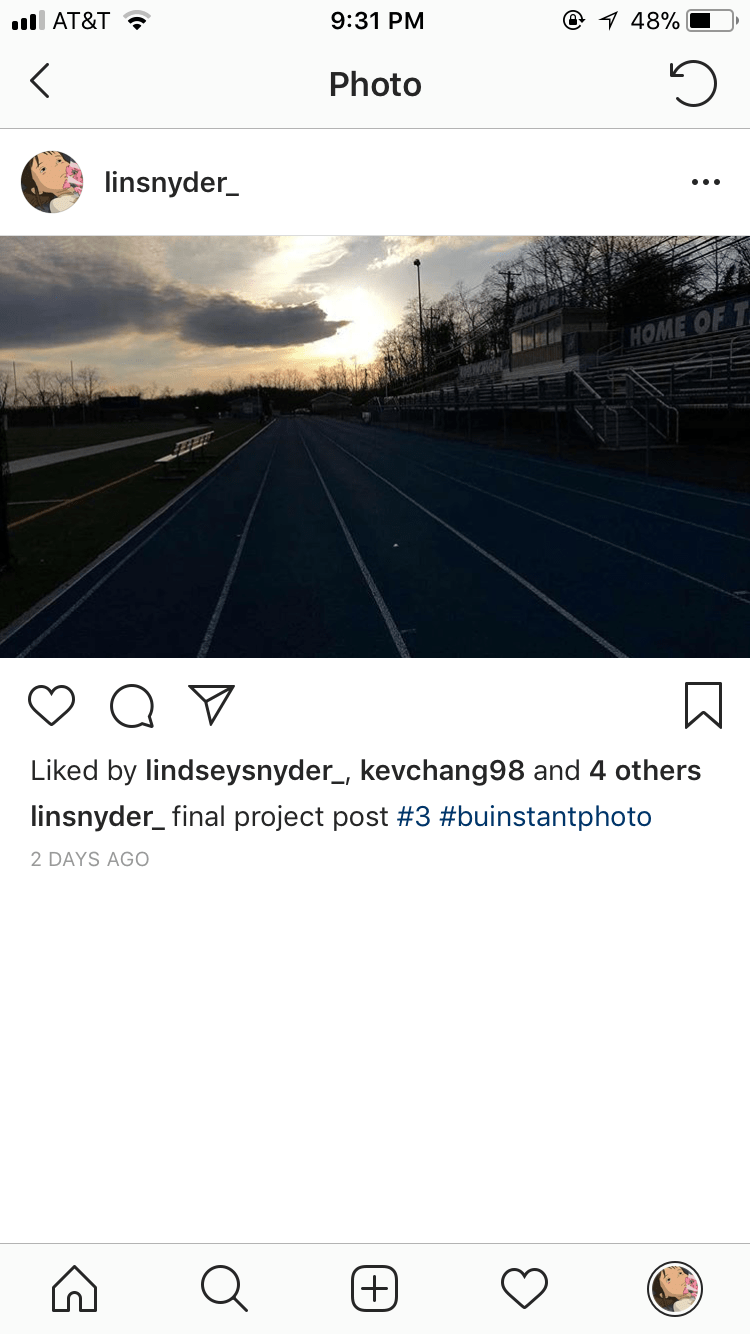
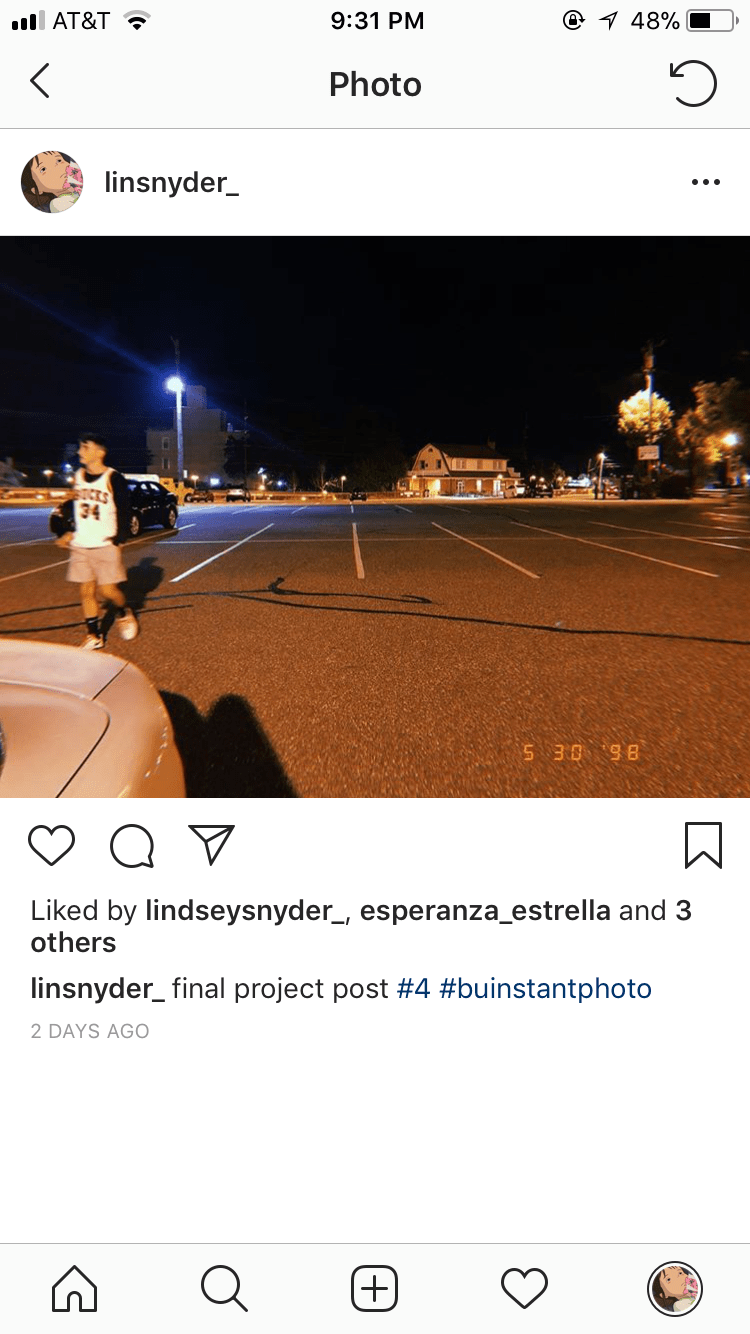
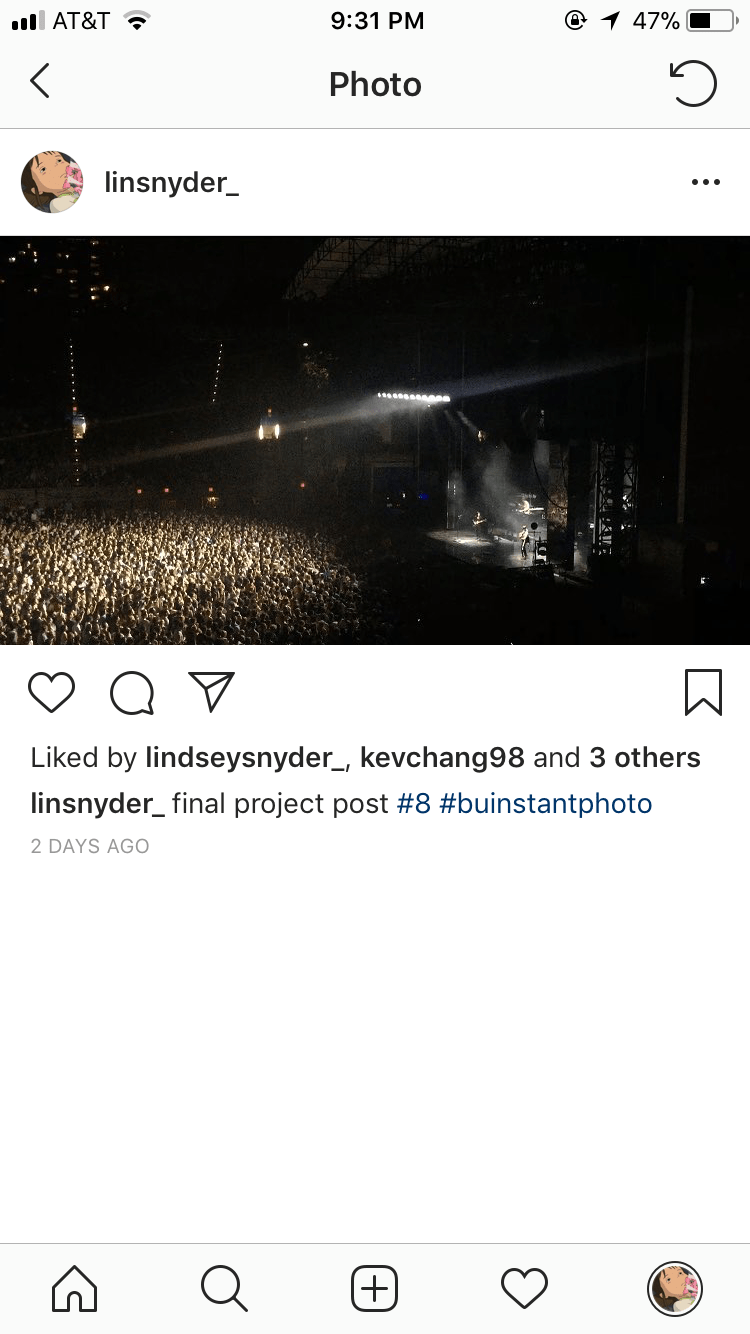
In the Instagram posts captioned, “Final Project Post #3,” “Final Project Post #4,” and “Final Project Post #8,” an elongated horizontal component can be recognized. At first glance of my feed, all of the contextual aspects are cut off from the viewer. Therefore, it becomes much more challenging for a potential follower to decipher what the actual photograph entails. Firstly, in the post, “Final Project Post #4,” the man pictured is completely bisected. He becomes an ambiguous figure, which raises questions for the viewer. For all we know, the man could be an essential part of the photo’s understanding, yet we have absolutely no clue as to what he looks like from the square template Instagram invokes. Then, in the post, “Final Project #8,” half of the crowd is not shown due to the square template. Because of this, the setting seems much more intimate than a normal concert setting. However, if the picture is actually opened, the viewer learns that the crowd is actually twice as large in size. All of these examples provide evidence that the square template is deceptive and does not properly grasp a photo in its entirety.
Another part of Instagram that greatly limits a person’s audience on the platform is what and who users can actually tag. In all of the photographs I posted for my final project, I had difficulty tagging specific aspects of each one. In turn, I decided to not even go through the hassle of figuring out ways to tag my posts because of how tedious and limiting the option is. A good example of this is titled, “Final Project Post #7.” There are so many variables to the actual picture, yet it was basically impossible to make tags that reflected what the image depicted. If I had the ability to, I would tag her backpack, the thermos, her sneakers, the trees, the pathway, the season, the activity we were doing (hiking), and even how the experience made me feel (happy and at peace). Instagram does not provide this option. It only allows its users to tag people who are present in the photo and who are other Instagram users. When I actually posted this on my personal account, I was unable to tag my friend because she deactivated her account a couple weeks before. As such, this gave absolutely no context to my followers and made it impossible for them to figure out who I took this picture of.
Thinglink completely turned Instagram’s notion of “tagging” on its head. It is a platform that is much more interactive with users. It provides a means of engaging with an entire community of people that share similar interests or have similar posts. For example, I posted an image of an ocean from my trip to San Francisco. Thinglink provided me with a multitude of tagging options. These included, but were not limited to, tagging text that embodied one’s photograph or even tagging another visual, audio, or video clip that helped users gain more insight into a person’s photograph. In my ocean post, I tagged words like “ocean,” “blue,” “mountains,” “horizon,” and “rocks,” to attract others to my post. When grouped together, these words allude to beach scenery, which a lot of people enjoy looking at. Another tool I utilized in this post was tagging music that optimizes a person’s experience when viewing my photograph. It’s really incredible how Thinglink takes the user’s whole experience into account. It’s not just the visual cues that matter; auditory context provides greater insight into what is being seen, too.
Lastly, another issue that users run into when using Instagram is the less than impressive selection of editing tools. To begin, the app only has a total of twenty-four filters available for its users. Most of these filters are actually the same filters that were advertised the first time Instagram emerged as a key player in social networking. At the time, the filters definitely revolutionized the way in which people edited their photographs. Today, these filters are, for the most part, obsolete. Personally, I don’t know anyone who uses the filters that Instagram has constructed. Almost everyone I know uses other apps because there is a more expansive variety of choices. Currently, VSCO is a very popular app used to put filters on images. Another predicament people face when editing their photos, specifically selfies, is the incapability of bettering one’s appearance. On apps like Facetune, users have the option of fixing flaws they feel devalue their appearance. Some of these options are smoothing over skin, removing red eyes, and even whitening teeth. In my “Final Project Post #4,” I used another app called, “Huji,” to give the photograph the nostalgic quality that the analog photograph engendered. Then, I took the image from “Huji” to “VSCO” to increase the brightness, heighten the contrast, and make the saturation warmer. After all of these steps, I finally uploaded my picture to Instagram without using the app’s editing options whatsoever.
Instagram encourages aesthetically pleasing content. This can range from beautiful people to beautiful scenery. Either way, it removes the creative component that Instagram originally advertised itself as. Previously, Instagram was developed as a means for photographers to share their work. It has evolved into a place where being original is characterized as being “weird” or “culturally inept.” The app has become a wasteland for selfies and sunsets. Instagram is now a medium where people post pictures to boost their egos. By subscribing to Instagram’s aesthetic ideals, people are ignoring the potential the app has to start productive or intellectually stimulating conversation.
Thinglink Posts:


Instagram Posts:

 Lindsey's Blog