BP2, W5

This week, we learned a lot regarding how social media influences us. Two key concepts include that we place a lot of emphasis on our social media presence by hashtagging or obsessing over our aesthetic and the extent to which we have underscored the power of the selfie. These notions shaped the discussion around readings such as “The Allure of the Selfie, “Social Media Selves,” and the supplementary readings. People have become extremely invested in the posts they are curating that they spend hours on end developing a post that speaks to others…not to themselves. They want validation from others to ensure that the way in which they are living their lives is detected as being correct. If anything, we are creating a generation of people who are almost identical and have no liberating thoughts or ideas to creatively think for themselves.

I learned about Kasch’s study regarding Facebook, as well as, the various mechanisms used to construct an aesthetically pleasing Instagram page. I definitely can discern that Kasch’s investigation is relevant to today. People are constantly viewing their profile to appear a certain way to their friends. As such, they do things like tag or untag themselves from pictures, carefully think out their own posts, and attempt to gain a large friend list. Then, through the different techniques, I came to the realization that people truly care how others view them, and therefore, put endless amounts of time into fulfilling a specific look to their social media, whether that be Facebook or Instagram.

I think much advice can be drawn from this week. Firstly, it has come to my attention that people must not spend as much time on social media. It reaches a point where we begin to get so wrapped up in our own accounts (a small projection of who we are) that we lose ourselves. As such, it is important to keep a healthy distance to one’s social media. Another piece of good advice is that it is not worth it to stress over social media. These platforms do absolutely nothing to enhance our experience on earth. It is important that people know that one’s significance in the world is not produced by the amount of followers they have. Rather, it is the quality of our relationships to our followers that counts.

Screen Shot 2018-06-29 at 11.19.05 PM.png
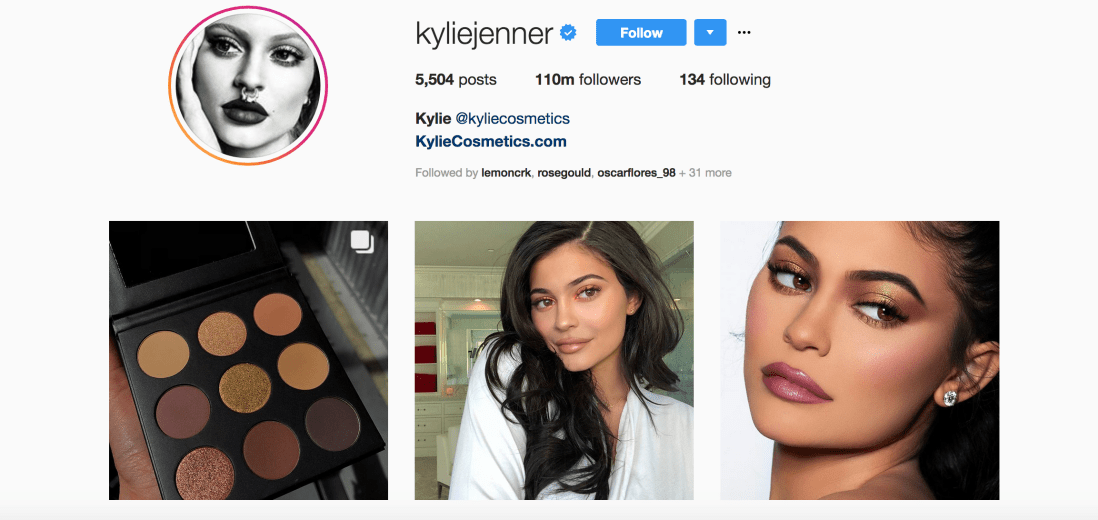
Kylie Jenner’s Instagram supports everything I have stated above. She heavily lives her life through social media, in order to illustrate a particular image about herself to the public. Nonetheless, I believe that she has stricken a healthy balance with the website. Once she had her child, she knew that her life was worth so much more than her presence on Instagram. Now, she had a bigger purpose in life: being a mother.

Final Project

Photography has been utilized for centuries as a means of capturing a particular moment in time. There have been many mechanisms used to construct a photograph’s meaning, which include the daguerrotype, the Kodak camera, and digital cameras. At the time, these devices seemed revolutionary; however, did they do much to enhance photography? Although these methods have transformed photography as an art form, they have also restricted people. “The photograph not only signals a different relationship to and over nature, it speaks very much to a sense of power in the way we seek to order and construct the world around us” (Clarke 11). This same quote can be discerned throughout social media. Users attempt to control their identities through platforms like Instagram, in order to garner a following. Gaining followers is extremely difficult because there are a few key components that many potential followers look for in one’s account. This constant pressure promotes people to act and post pictures that do not speak to their authentic selves. Instagram asks its users to conform to a specific aesthetic, in order to align with the algorithm put into place. Some of these factors include the square setting, the restrictive tagging options, and the limited amount of editing mechanisms made available for users within the app.
Instagram’s square setting greatly limits the posts that users can create. More often than not, people’s photographs are cut off or distorted by this square template. If you do a quick Google search, you will find millions of people inquiring how to fit an entire picture onto their feed. People have to download second and third party apps just to somewhat fit their full image into Instagram. However, this comes with a consequence. Other apps create white space on the sides of your photograph, in order to properly fit one’s image onto their Instagram feed. As a result, a person’s feed becomes very distorted and unappealing to the eye. In turn, this has a big impact on whether or not someone is going to follow your account. People are drawn to those who have feeds that are not only captivating, but also aesthetically stimulating. Having a picture with a two-sided border breaks up the fluidity of one’s entire account. Therefore, engaging in these practices will thus be very detrimental to a person’s presence on the website. This same idea can be delineated within the pictures I posted onto my Instagram account.
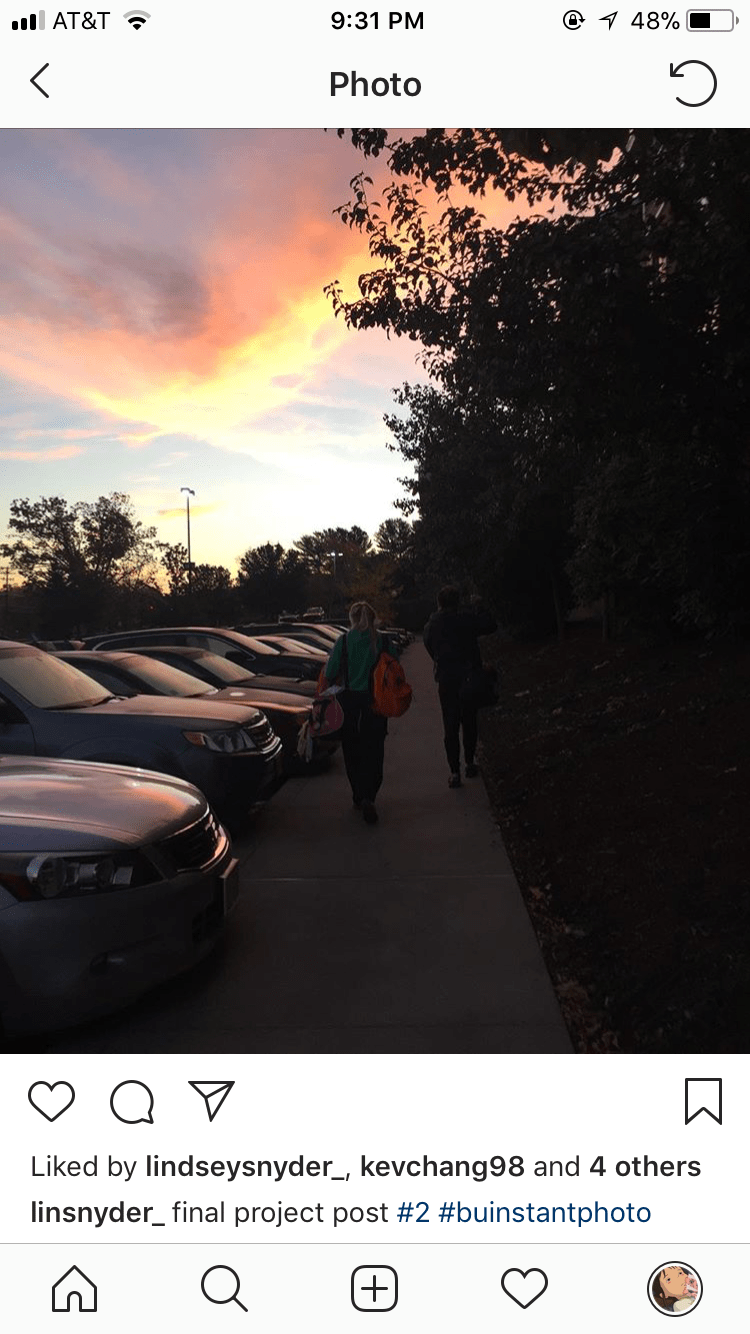
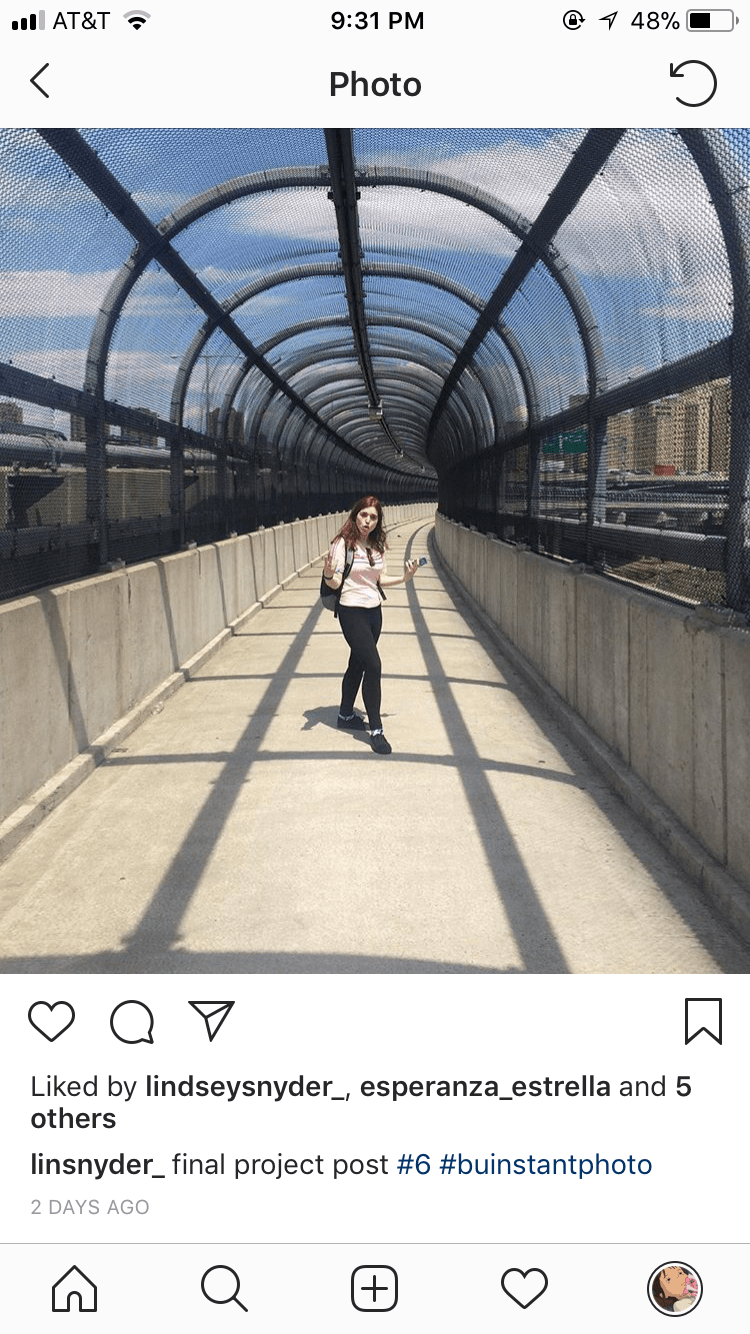
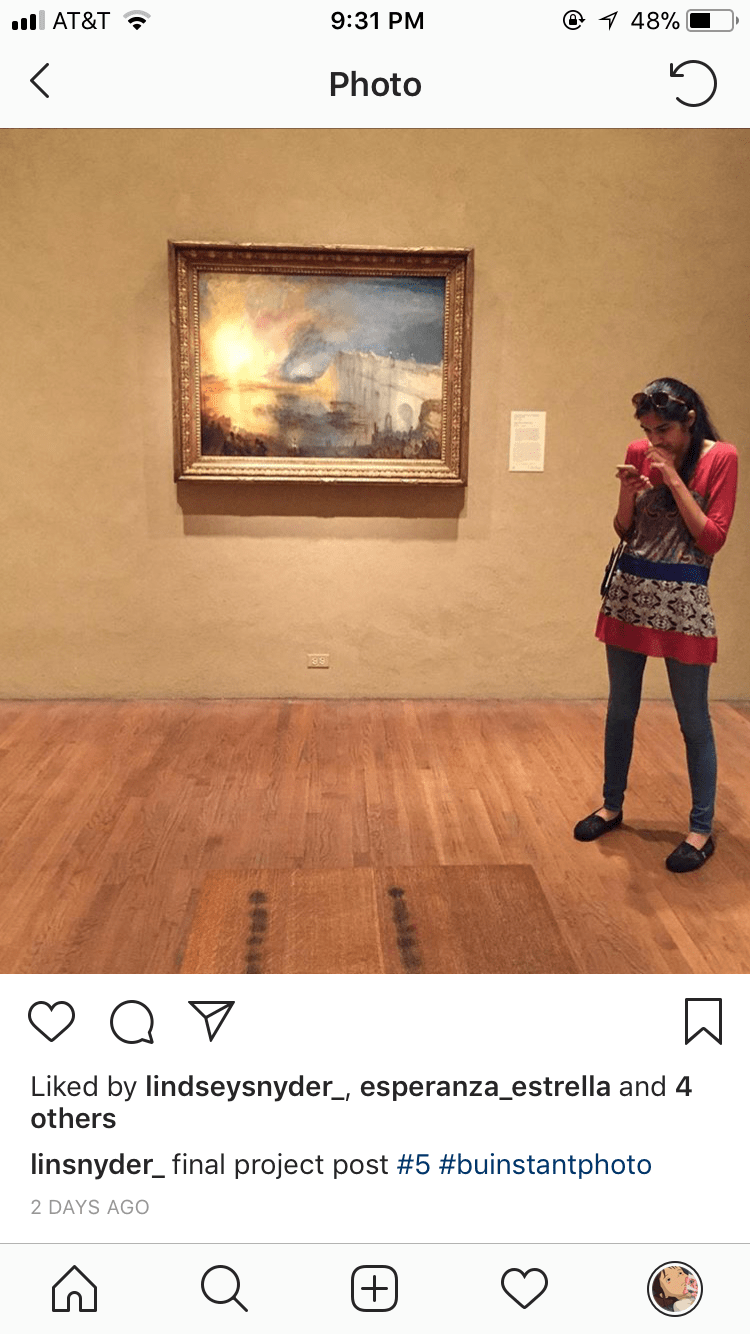
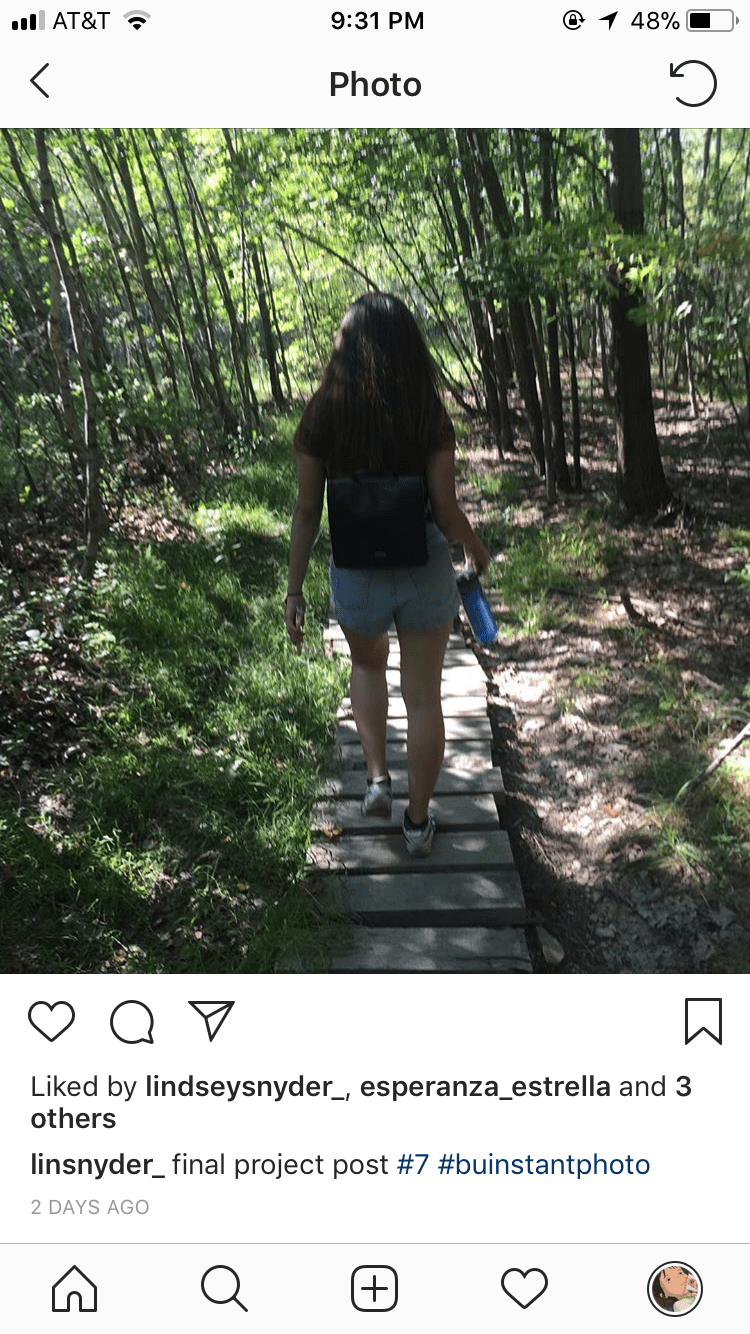
In my Instagram posts captioned, “Final Project Post #1,” “Final Project Post #2,” “Final Project Post #5”, “Final Project Post #6,” and “Final Project Post #7,” a constant theme is made apparent. There is a vertical limitation to the viewing of these posts. When a person comes onto this profile and quickly glances at the feed, the height of the pictures is undetected. Because of this loss of perception, much of the image is lost in translation. The entire context of a photograph is necessary to truly ensure one’s understanding of what is in front of them. For example, in “Final Project Post #6,” the viewer only sees me standing in a winding tunnel that isn’t that tall. However, there is a huge difference once this post is opened because the size of it grows exponentially. Size, although a factor of formalist thought, is still very important and necessary to this story’s background.
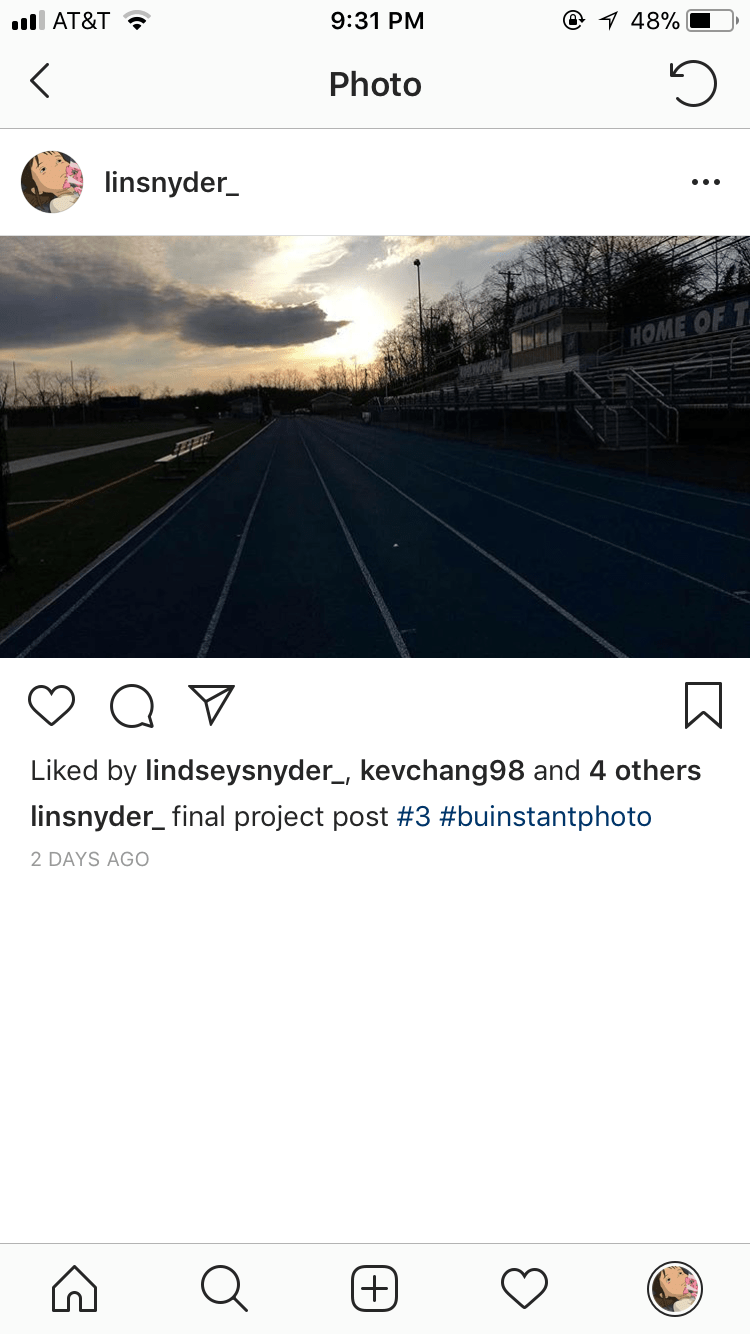
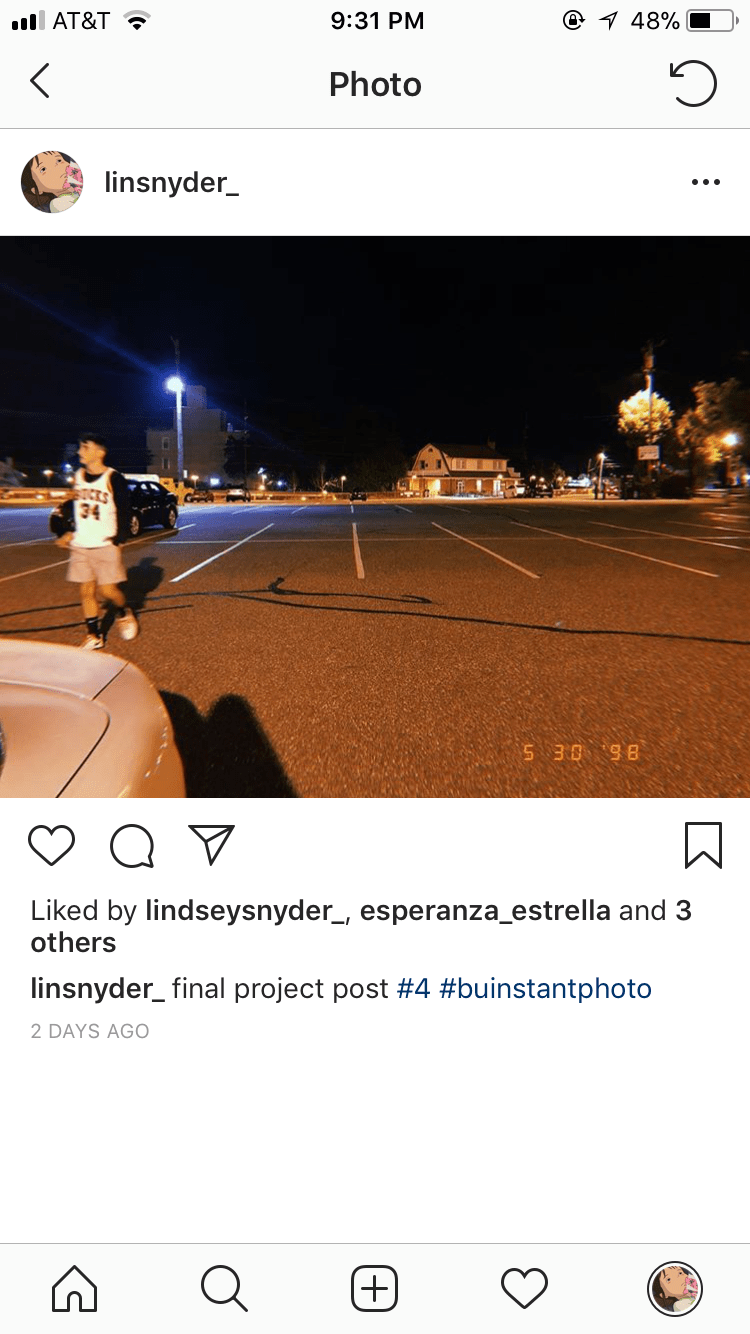
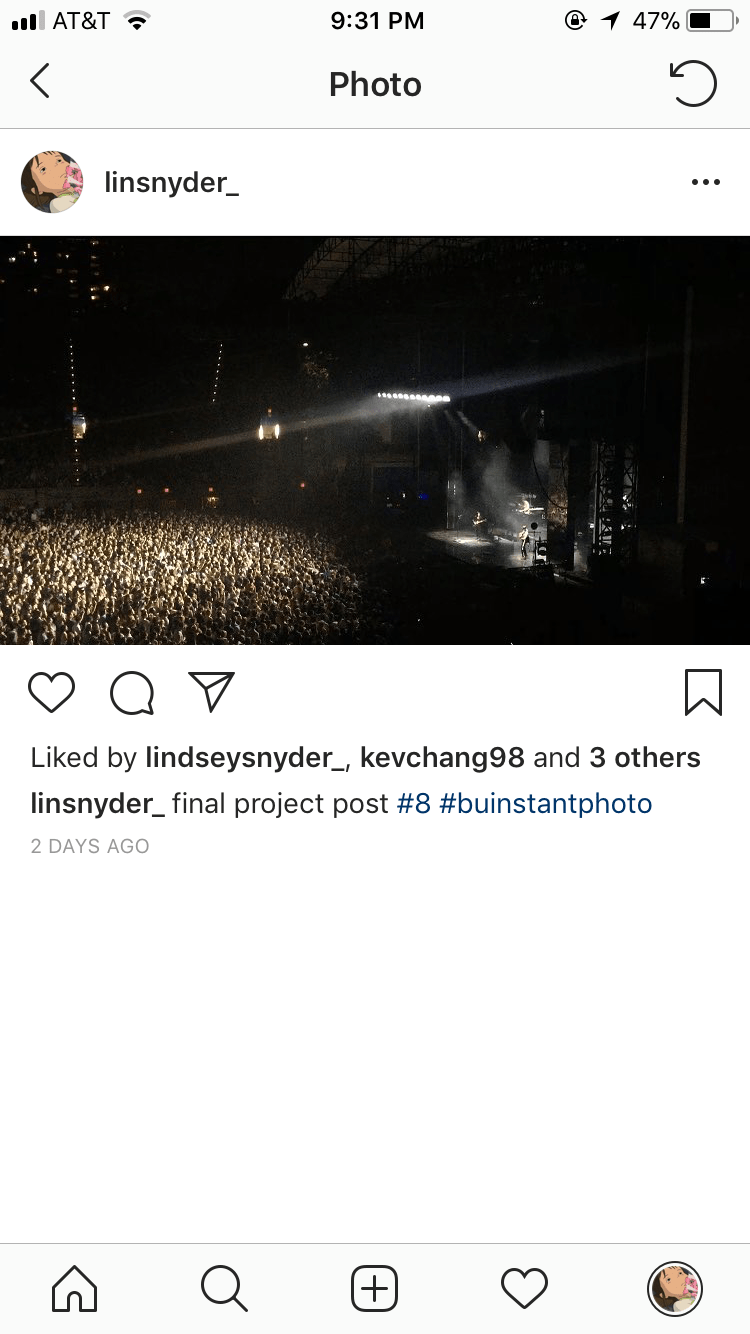
In the Instagram posts captioned, “Final Project Post #3,” “Final Project Post #4,” and “Final Project Post #8,” an elongated horizontal component can be recognized. At first glance of my feed, all of the contextual aspects are cut off from the viewer. Therefore, it becomes much more challenging for a potential follower to decipher what the actual photograph entails. Firstly, in the post, “Final Project Post #4,” the man pictured is completely bisected. He becomes an ambiguous figure, which raises questions for the viewer. For all we know, the man could be an essential part of the photo’s understanding, yet we have absolutely no clue as to what he looks like from the square template Instagram invokes. Then, in the post, “Final Project #8,” half of the crowd is not shown due to the square template. Because of this, the setting seems much more intimate than a normal concert setting. However, if the picture is actually opened, the viewer learns that the crowd is actually twice as large in size. All of these examples provide evidence that the square template is deceptive and does not properly grasp a photo in its entirety.
Another part of Instagram that greatly limits a person’s audience on the platform is what and who users can actually tag. In all of the photographs I posted for my final project, I had difficulty tagging specific aspects of each one. In turn, I decided to not even go through the hassle of figuring out ways to tag my posts because of how tedious and limiting the option is. A good example of this is titled, “Final Project Post #7.” There are so many variables to the actual picture, yet it was basically impossible to make tags that reflected what the image depicted. If I had the ability to, I would tag her backpack, the thermos, her sneakers, the trees, the pathway, the season, the activity we were doing (hiking), and even how the experience made me feel (happy and at peace). Instagram does not provide this option. It only allows its users to tag people who are present in the photo and who are other Instagram users. When I actually posted this on my personal account, I was unable to tag my friend because she deactivated her account a couple weeks before. As such, this gave absolutely no context to my followers and made it impossible for them to figure out who I took this picture of.
Thinglink completely turned Instagram’s notion of “tagging” on its head. It is a platform that is much more interactive with users. It provides a means of engaging with an entire community of people that share similar interests or have similar posts. For example, I posted an image of an ocean from my trip to San Francisco. Thinglink provided me with a multitude of tagging options. These included, but were not limited to, tagging text that embodied one’s photograph or even tagging another visual, audio, or video clip that helped users gain more insight into a person’s photograph. In my ocean post, I tagged words like “ocean,” “blue,” “mountains,” “horizon,” and “rocks,” to attract others to my post. When grouped together, these words allude to beach scenery, which a lot of people enjoy looking at. Another tool I utilized in this post was tagging music that optimizes a person’s experience when viewing my photograph. It’s really incredible how Thinglink takes the user’s whole experience into account. It’s not just the visual cues that matter; auditory context provides greater insight into what is being seen, too.
Lastly, another issue that users run into when using Instagram is the less than impressive selection of editing tools. To begin, the app only has a total of twenty-four filters available for its users. Most of these filters are actually the same filters that were advertised the first time Instagram emerged as a key player in social networking. At the time, the filters definitely revolutionized the way in which people edited their photographs. Today, these filters are, for the most part, obsolete. Personally, I don’t know anyone who uses the filters that Instagram has constructed. Almost everyone I know uses other apps because there is a more expansive variety of choices. Currently, VSCO is a very popular app used to put filters on images. Another predicament people face when editing their photos, specifically selfies, is the incapability of bettering one’s appearance. On apps like Facetune, users have the option of fixing flaws they feel devalue their appearance. Some of these options are smoothing over skin, removing red eyes, and even whitening teeth. In my “Final Project Post #4,” I used another app called, “Huji,” to give the photograph the nostalgic quality that the analog photograph engendered. Then, I took the image from “Huji” to “VSCO” to increase the brightness, heighten the contrast, and make the saturation warmer. After all of these steps, I finally uploaded my picture to Instagram without using the app’s editing options whatsoever.
Instagram encourages aesthetically pleasing content. This can range from beautiful people to beautiful scenery. Either way, it removes the creative component that Instagram originally advertised itself as. Previously, Instagram was developed as a means for photographers to share their work. It has evolved into a place where being original is characterized as being “weird” or “culturally inept.” The app has become a wasteland for selfies and sunsets. Instagram is now a medium where people post pictures to boost their egos. By subscribing to Instagram’s aesthetic ideals, people are ignoring the potential the app has to start productive or intellectually stimulating conversation.

Thinglink Posts:


Instagram Posts:
IMG-8366IMG-8367IMG-8368IMG-8369IMG-8371IMG-8370IMG-8372IMG-8373

BP 1, WK 5

IMG-8363IMG-8364IMG-8365

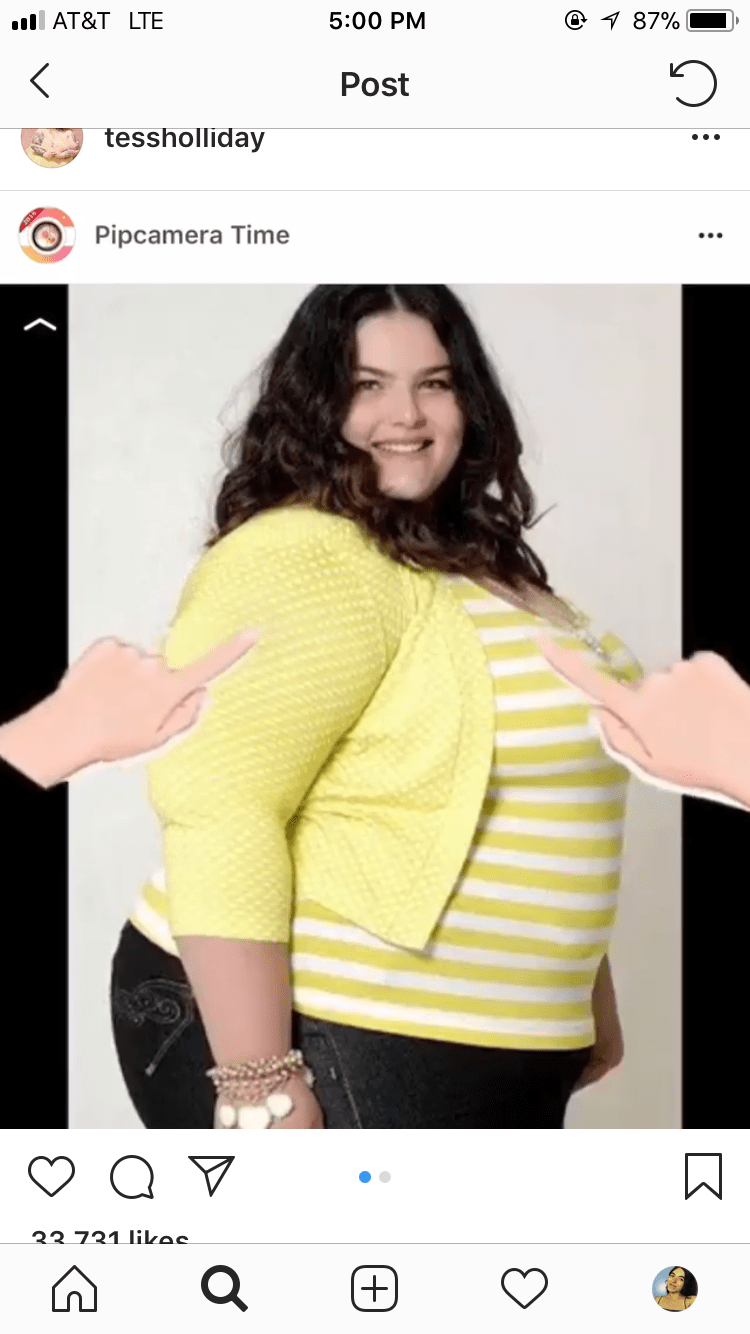
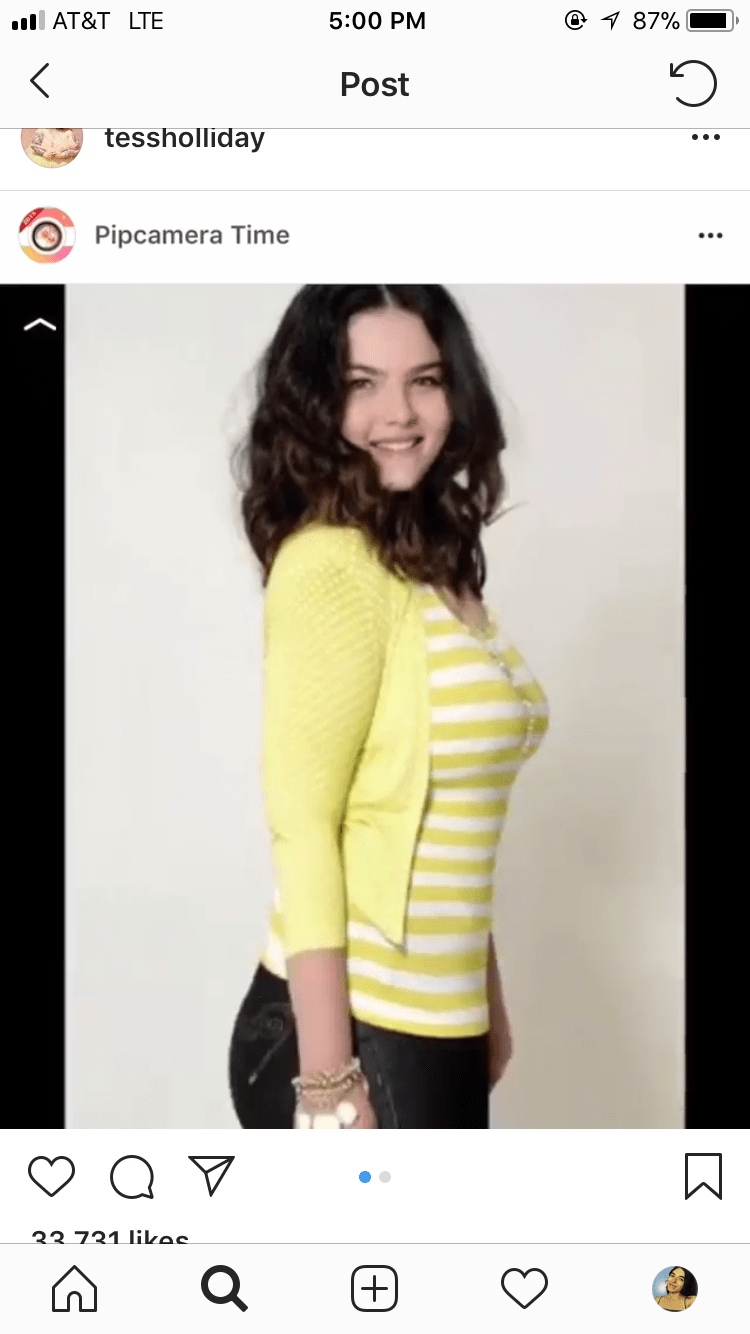
This is an Instagram post that was created by a plus-sized model, Tessa Holliday. Tessa has an extremely large influence on those who struggle to accept their bodies the way that they are. She constantly makes uplifting posts about how her weight does not define who she is as a person. Nonetheless, Tessa still faces ridicule and cyber-bullying on a daily basis, as a result of her weight.

Earlier this month, Tessa stumbled upon an app called, “Pipcamera Time.” It is an app that instantly removes a person’s fat through photo editing. It demonstrates to users of the app what an ideal body looks like. The app also illustrates that a person is simply not enough; there is always something else to improve upon. Society’s beauty standards are the only aesthetics a person should subscribe to. With the presence of apps like these, messages like Tessa’s become dissolved.

This post similarly reflects “The Art of the Steal” because the app stole Tessa’s image and passed it along as their own content. In doing so, they twisted her positive message to one full of negativity. Then, “I Dream About It Every Night” is reflected in the app depicted in this Instagram post. Indeed, the app has the capability to make someone feel and look more beautiful. The app’s intentions might have been completely pure. Even so, the effects are detrimental to those who struggle with body positivity. The only take away from the existence of this app is that a person is never enough. Fixing and picking at yourself enhances you, in the eyes of the creators of this app.

Tessa helps her followers understand her disgust of this app through her long caption and video depicting how the app works. Through this post, she is not only helping her followers become more accepting, but also helping them to digest how morally wrong this app is in today’s body positive world.

BP 2, W4

The Process
It was a very simple process to retrieve a disposable camera. I went to the CVS right down the road from my house and bought one instantly. I knew I was going to California the day after I bought my camera, so I was very excited! Instead of taking pictures on my iPhone, I challenged myself to only capture moments with my newly purchased camera. It was actually so much fun taking pictures! I didn’t know what I was going to take pictures of going into the trip. In fact, I was carrying my camera with me at all times. The only time I pulled it out was when I saw something that captivated me aesthetically. I wasn’t looking for a specific shot. Simply put, if it felt right, I snapped a photo!

When I got home, I was so excited to get my film developed! It definitely took much longer than what I imagined. I remember when I was younger, my parents had photos from their disposable cameras developed easily within a day. On the other hand, mine took about a week and a half to be fully processed.

Because I had work, my mom picked up the photos for me. I was completely unsure as to how they would turn out. I was convinced the quality was not going to satisfy me and that my entire roll of film went to waste. Nonetheless, I was shocked when I opened the envelope. I found a multitude of incredible pictures that my iPhone could have never taken. Sure, the quality of my phone might be better, but the feeling of taking pictures on an analog camera is not the same.

Scanning the photographs was not fun. It was a long, tedious process. I had to constantly go back and forth between my printer and my laptop to accept files and to move them to the proper location. I actually felt that once I uploaded them, their quality diminished. The same feeling I got from the hard copy was in no way close to the digital form. The pictures lost the warm quality that illuminated from them once they were on my laptop.

The photographs were exactly everything I wanted and more. I really felt a precious connection to my photographs because they induced a nostalgia I hadn’t felt in quite some time. In the future, I definitely want to take more analog photographs. The process was time consuming, but in the end, the pictures are one-hundred percent worth it!

BP1, W4

Szarkowski hugely impacted the realm of photography. He was a progressive thinker who insisted thst the photograph should be democratic. Szarkowski distinguished himself from his predecessors, Beaumont Newhall and Steichen. He asserted, “I could assume a more analytic, less apostolic attitude” (O’Hagan 2). This approach helped carve a new form of photographic aesthetic that has continued to influence how the public sees the world. He also was the first person to introduce the commercial art galley in New York.

Throughout this article, O’Hagan praises the revolutionary work of Szarkowski. He insists that Szarkowski’s influence, greatly transformed photography as a medium for art. He challenged the idea of what aesthetics truly meant and repeatedly put his reputation on the line. For example, his curated show called “New Documents,” created controversy. The show contained quite a bit of edgy and urban photographs. “The images were transgressive in both their form and content harsh black and white shots of so-called freaks, outsiders, and misfits” (O’Hagan 3). The other photographers featured shot “documentary style,” which was at the time, a completely new way of capturing subjects. O’Hagan is a big fan of Szarkowski’s work from the very beginning of this piece. Within the first paragraph, O’Hagan claims, “One could argue that he was the single most important force in American post-war photography” (O’Hagan 1).

I don’t think O’Hagan is necessarily overlooking anything; however, I do believe that his praise of Szarkowski certainly undermines the work of those that came before him. If a person follows similar ideologies to O’Hagan, it becomes a problem for photography as an art form. Discrediting the work of Newhall and Steichen, discredited the photography that they curated. This is problematic because then, photography gets boxed into what is deemed “exceptional photography” and “unexceptional photography.” Categorizing photography actually opposes everything it signifies. Photography tells many different stories and labeling it (good or bad) greatly influences the way photographers go about capturing images.

BP 2, W3

The entire premise of “Memento” revolves around Leonard’s photographs and what’s written on them. Leonard takes pictures of certain people and makes assessments of them because he has anterograde amnesia. These pictures help him understand how he’s supposed to receive these people, given that he immediately forgets them. The movie seems to be titled perfectly. The photographs are taken as a reminder of who these people truly are to Leonard. However, his descriptions don’t match who these people actually are. For example, Natalie is not everything she is made out to be. On the back of Natalie’s photograph, Leonard describes her as someone who comforts and pities him. It comes to the forefront that Natalie actually despises Leonard and is solely using his illness for her own personal gain.

Memento mori is a Latin word that signifies a reflection on death. Even more specifically, it is a reminder of death. With all that being said, all of these photographs metaphorically represent the “death” of Leonard’s old self. These pictures are the only way he is able to function within society. After the accident, Leonard not only lost his wife, but also himself. The photographs are constant reminders to the audience that Leonard is nothing but a shell of his old self.

“Memento” tells us that photography acts as clues into someone’s life. All of the people in Leonard’s photographs play an important role to him throughout the movie’s progression. This truthfully reflects photography because people photograph those who are salient and define their own existence. “Memento” didn’t convert the way I think about photography. Nevertheless, it certainly did enhance my idea that photographs are the puzzle pieces to a person’s story. Once assembled, these pictures generate who that person represents in the context of their world.

BP 1.5, W3

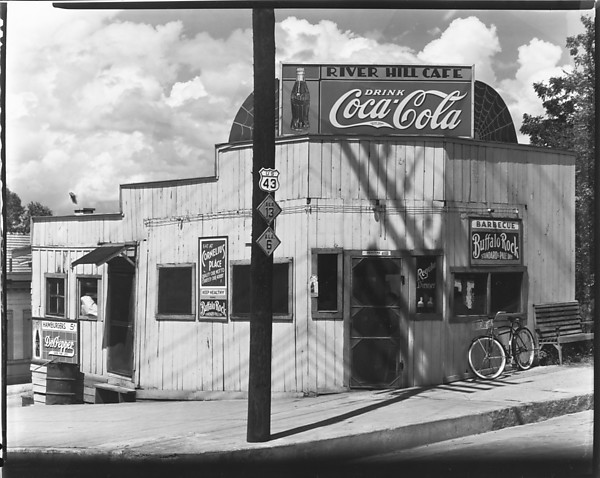
Evans’ image of River Hill Cafe has a lot to unpack. Firstly, the image being black-and-white denotes that it was taken during a time period when color photography was not accessible. Therefore, the audience must look at this image through a historical lens. Another element of art that is significant to this image is space. The door of the diner seems to be the focal point of the image; however, there are other distinguishable items. Some include the bicycle and the signs on the post. Nonetheless, they seem to blend in with the rest of the image because of their distance from the door. The diner spreads across the entire image. This tells the audience that as an entity, this restaurant consumes a lot of spacial area.

Three Principles of Design that are utilized in this image include emphasis, proportion, and balance. As noted before, there is great emphasis placed on the door. The door contrasts immensely with the rest of the image. Even though it is very dark, it definitely has a mysterious, yet inviting quality to it. Also, there is a lot of emphasis placed on the sign, especially the Coca Cola portion of it. Next, the proportion of items is very relevant to this image. The bigger the items, the larger the emphasis that is placed on them. For example, the bicycle and the signs are irrelevant features to the purpose of this picture. If they were removed, one could still discern that this image is meant to portray a cafe. Lastly, the photograph has a balancing quality to it. For instance, each side of the diner has a sign on it. The balance is underscored by the post separating both sides of the diner. It’s almost as if the post is bisecting the diner into two equal halves.

I think the meaning behind this photograph is very clear: Evans was illustrating how capitalism was overrunning society during this time. Why is a seemingly normal cafe marketing Coca Cola to its customers? A cafe has much more to offer than a beverage. This is especially different from the signs we see today for cafes. It showcases how much these big corporations were trying to monopolize smaller businesses.

Using “The Art of Seeing Art’s” language shifted my perspective of the image. At first, this was merely just a photograph of a cafe to me. However, the more I used the different forms of analysis, I soon had a better grasp of what the image was trying to share. I think this is shown in my analysis. At first, I was critiquing the physical features. As a dug deeper, I soon realized that the image was offering much more than meets the eye. I first found this image appealing because of how simplistic it seemed. Nonetheless, I learned that there were many more layers to it than just its picturesque quality.

PH1343

Walker Evans’ image

unnamed

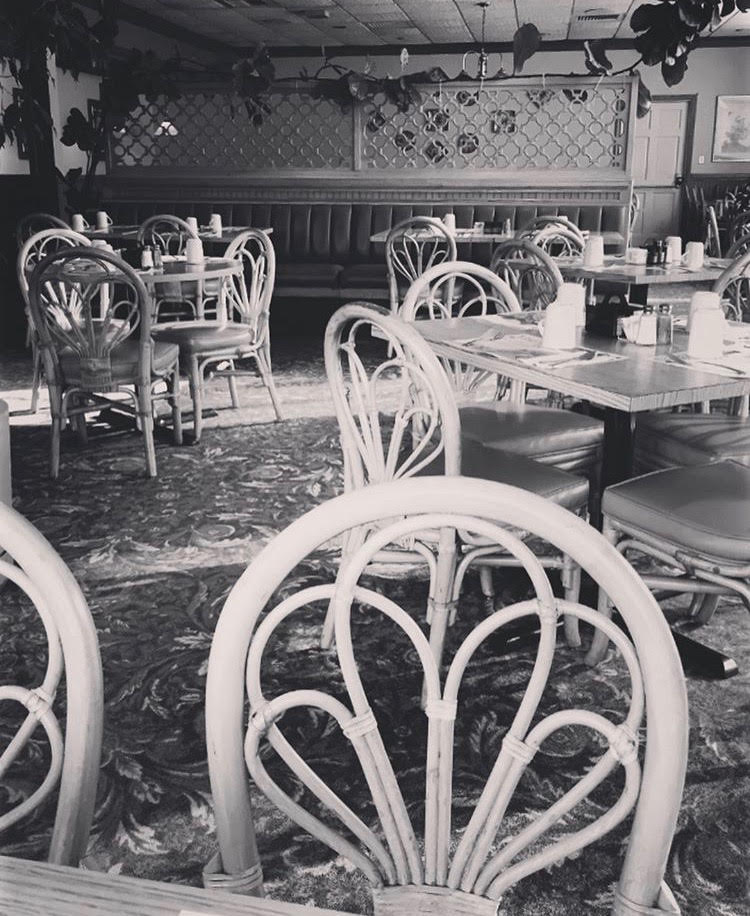
My Homage to Evans

BP1, W3

The photobooth is a cultural phenomenon that has greatly impacted photography as a medium. From the beginning, photography was very staged. It was very difficult for people to have truly authentic moments with the camera, as there was always a photographer behind it. The photobooth introduced an extremely intimate component that no other photographic contraption offered. “Before the photobooth first appeared, in the 1920s, most portraits were made in studios. The new, inexpensive process made photography accessible to everyone” (“Four for a Quarter”). As a result, it was massively popularized throughout the world. “Everyone loved sitting in the booth, making faces, kissing, squeezing in friends” (“History of the Photobooth”). However, complaints started coming in as early as the mid-Fifties regarding people’s behavior within the photobooth. Many people were taking advantage of the fact that the photobooth offered a much more private setting for those being photographed. As a result, many people took that as a cue to start acting inappropriately with partners or even stripping down their clothes, so they were nude. Comically, many stores removed the curtain in order to inhibit this public indecency.
The photobooth is so special because of how quickly it rose to fame. In 1921, Josepho Anatol, was in China. He constructed a rough idea as to how he could execute his invention. In order to get his creation off the ground, he came to America in pursuit after investors. With the help of friends and relatives in New York City, he was able to raise $11,000. “To understand how much money $11,000 was then, the average cost of a reasonably sized house in 1925 was $2,000” (“History of the Photobooth”). Thus, we can definitely assert that he had the resources to carry out his plan, and that he did! He was able to find the appropriate machinists and engineers to help him build the photobooth. By September of 1925, he opened up his Photomaton Studio. “Crowds, as many as 7,500 people a day, would line up to have their photos taken for 25 cents for a strip of eight” (“History of the Photobooth”). Josepho Anatol had achieved the American Dream within a mere span of four years.
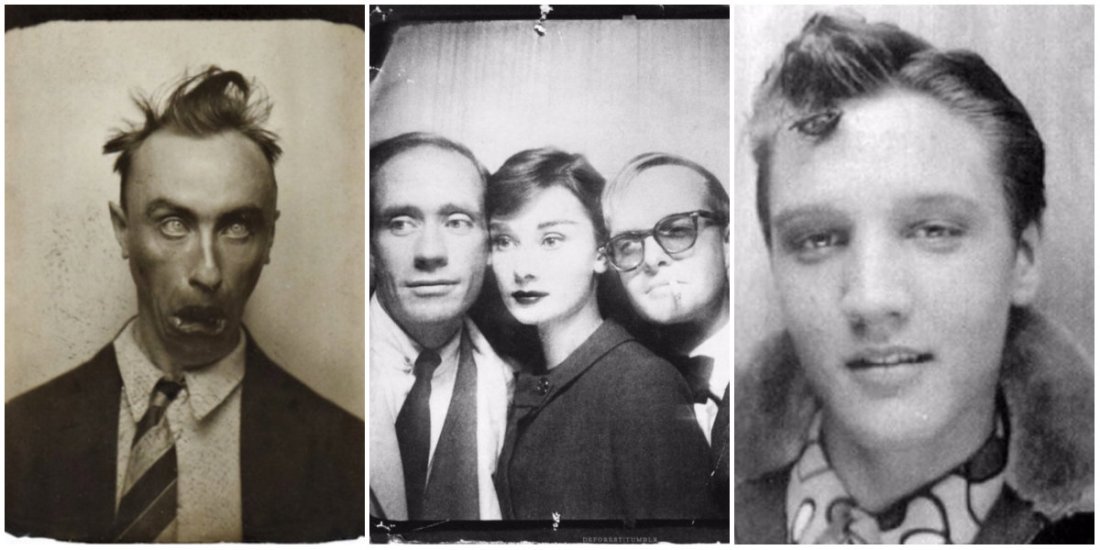
The photobooth was characteristically unique for its qualities. Firstly, the fun part of a photobooth was squeezing everyone in to fit within frame. To many this would be seen as a limitation; however, to many, it’s what made it fun. Another key point is that the photobooth produced black and white images. To many, included the famous Andy Warhol, this was seen as an advantage. “When Warhol looked at the black-and-white photostrip, he saw it fully expanded” (“History of the Photobooth”). Hence, Warhol, along with many other artists, utilized the photobooth to depict famous people in a much more relaxed setting. This can be depicted below in the three images provided. All of these people have an insane amount of fame attached to their name; however, the photobooth has a normalizing quality to it. The photobooth simply captured people in their most genuine, human state, which is what makes it so incredible.

photobooth-celebs

https://www.vintag.es/2017/01/before-cell-phones-and-selfie-sticks.html

BP2, W2

The movie, Amelie, greatly reflects the readings that were given this week in many aspects. Instantaneous photography is a term used very loosely. At first, it was really only used to describe the fast pace at which people could create their visions into reality. However, the word became much more complex. “Photographers also came to use the word instantaneous as short-hand for authenticity and trustworthiness in their pictures” (Marien 43). With this in mind, the photographs captured in Amelie do just this. For example, the first photograph that the audience is exposed to, is the one of the man in the box. As the audience discerned, it clearly spoke the truth to someone’s past because it evokes tears from the original photographer’s eyes.

Instantaneous photographs capture a moment in time; however, they are much more than that. It is important for the viewer of that picture to take the whole context into perspective. Many of the photographs in Amelie have stories and must be decoded to fully understand. Firstly, this is shown in all of the images pieced together within the photo album. Because Amelie has no frame of context for any of these people, the faces all obtain a mysterious quality. As a result, the pictures take on the personalities that Amelie imagines they would have. Then, Amelie also leads Nino on a chase with her perplexing images. One of them is actually a picture of herself as a masked woman. She uses photography to explore her imagination, as well as, to provoke people’s creativity.

Amelie understands photography as a key to unlocking a story. Nonetheless, if that story is not accessible, she constructs her own story of that person. For instance, before she even knew who the “dead man” was, she envisioned a whole different life for him. He was someone who desired recognition from others because he was always isolated by others. The audience learns later on that this is unambiguously not the case. He is a repair man who keeps his head down and fulfills his duties. He seeks anything but acknowledgment from others.

Amelie is very similar to Vivian Maier. Vivian went her entire life photographing beautiful images, yet had no desire to share them with the world. This apprehension of recognition parallels greatly with Amelie. For the majority of the movie, she does not want to have her quote on quote claim to fame. Amelie takes joy in the adventure the pictures provide for her, yet she is scared of being exposed. What if Nino found out it was her and wasn’t satisfied? Then, the fictitious world she created with Nino would vanish within an instant. This is extremely similar to Vivian’s case. What if the photographs Vivian took were not as good as she thought? Would the public even receive her well for that matter? In both cases, these two artists are afraid of public scrutiny and criticism.

We can learn to embrace our imagination and to make our fantasies into a reality from Amelie. Amelie was someone who always lived in her daydreams. These dreams are what helped her cope through many difficult times in her life. Amelie delineated that art is a powerful medium that can transport, alleviate, and drive us towards our destinies.

BP 1, W2

Instantaneous photography has revolutionized the field of photography; however, what exactly is it?

There have been a wide variety of meanings attached to the word, instant, because it it a difficult concept to seemingly define. “Instant” reflects much more than speed. Nonetheless, there were many prominent writers and artists who solely classified it as such. Talbot, the inventor of the first practical photographic process in Britain, was seemingly the first to actually introduce the word, “instant,” into a description of the medium (Marien 34).Then, Abney, a well-known writer, argued that “instantaneity should depict a mere point in time” (Marien 34). In addition, a French photographer, Blanchere, described the word instantaneous as simply being “very rapid” (Marien 35). These definitions did not do the word instantaneous justice at all, thus, promoting the evolution of its definition.

“In the nineteenth century, the term instantaneous could be applied to a photograph of any subject so long as it contained an element of movement” (Marien 37). Throughout the nineteenth century, there is a recurring theme of what was referred to as the “loophole of retreat.” The phrase itself was “borrowed” from the Romantic poet, William Cowper (Marien 38). The poem reads, “Tis pleasant, through the loopholes of retreat/to peep at such a world; to see the stir/Of the great Babel, and not feel the crowd” (Marien 38). Describing an instantaneous photograph as such greatly expanded upon earlier definitions that were provided, but it still was avoiding a very important point: authenticity

Instantaneous photographs underscored trustworthiness and an authentic nature. It “implies spontaneous execution, capturing things as they actually looked at a particular moment in time” (Marien 43). Ultimately, instantaneity was paralleled with objectivity. It was now understood that pictures reflected the artist’s vision. Photography was not just about taking a picture of a medium, but rather an art form that had a true thought process behind it. Photography was created to capture beautiful moments and people who affected the photographer. This authenticity was discerned when accessible cameras like the Kodak and the Brownie emerged (Bresson). More and more people wanted to get their hands on cameras to document their story through instantaneous photography.

Instantaneous photography aligns perfectly with what Bresson asserts: “To me, photography is the simultaneous recognition, in a fraction of a second, of the significance of an event as well as of a precise organization of forms which give that event its proper expression.”